Shower strike plates – ensuring a reliable seal for shower doors
A suitable stop profile for the shower ensures a neat finish between the shower door and another glass panel. It helps to seal the gap and keep out splashing water. Particularly with frameless glass showers, choosing the right sealing profile is crucial for a reliable seal.
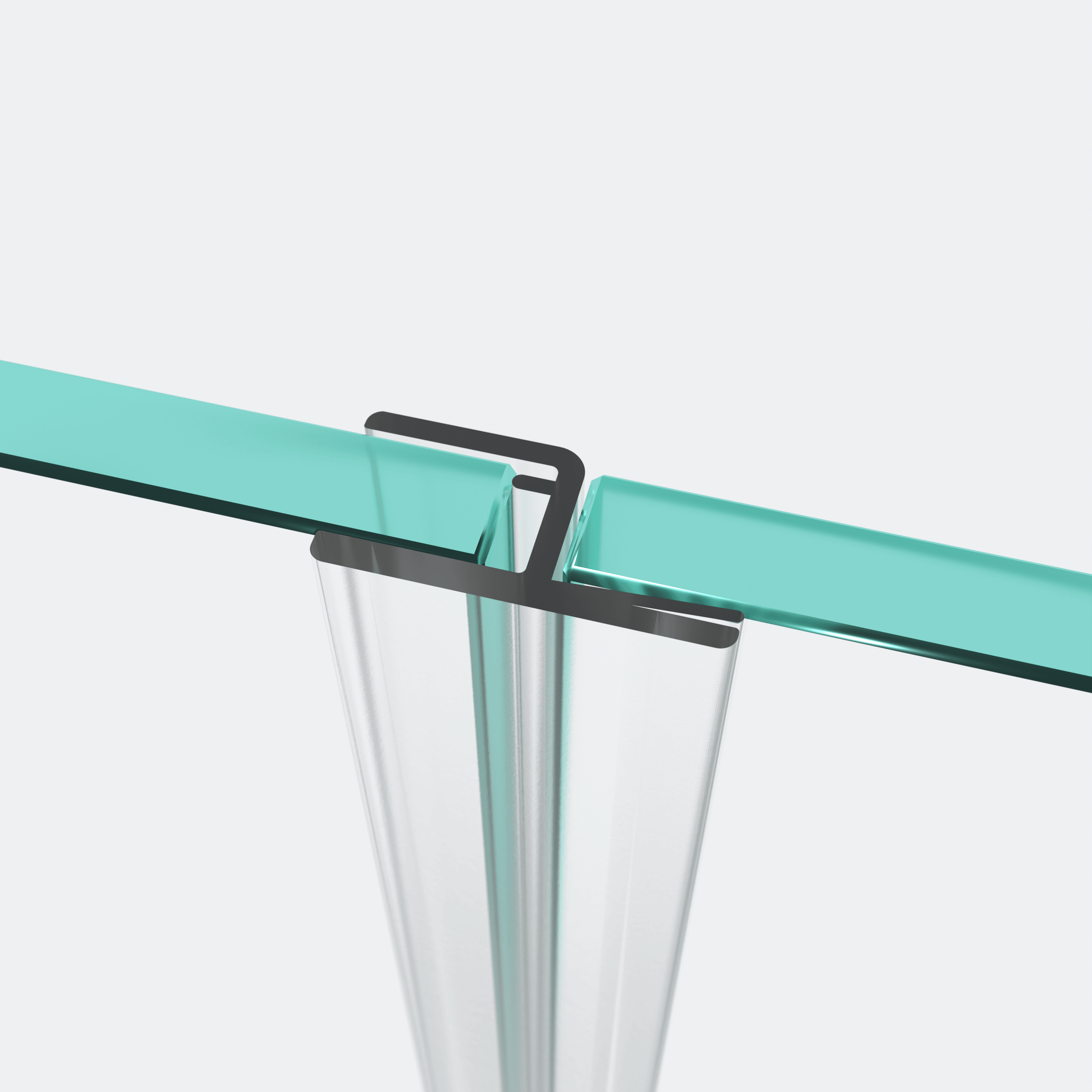
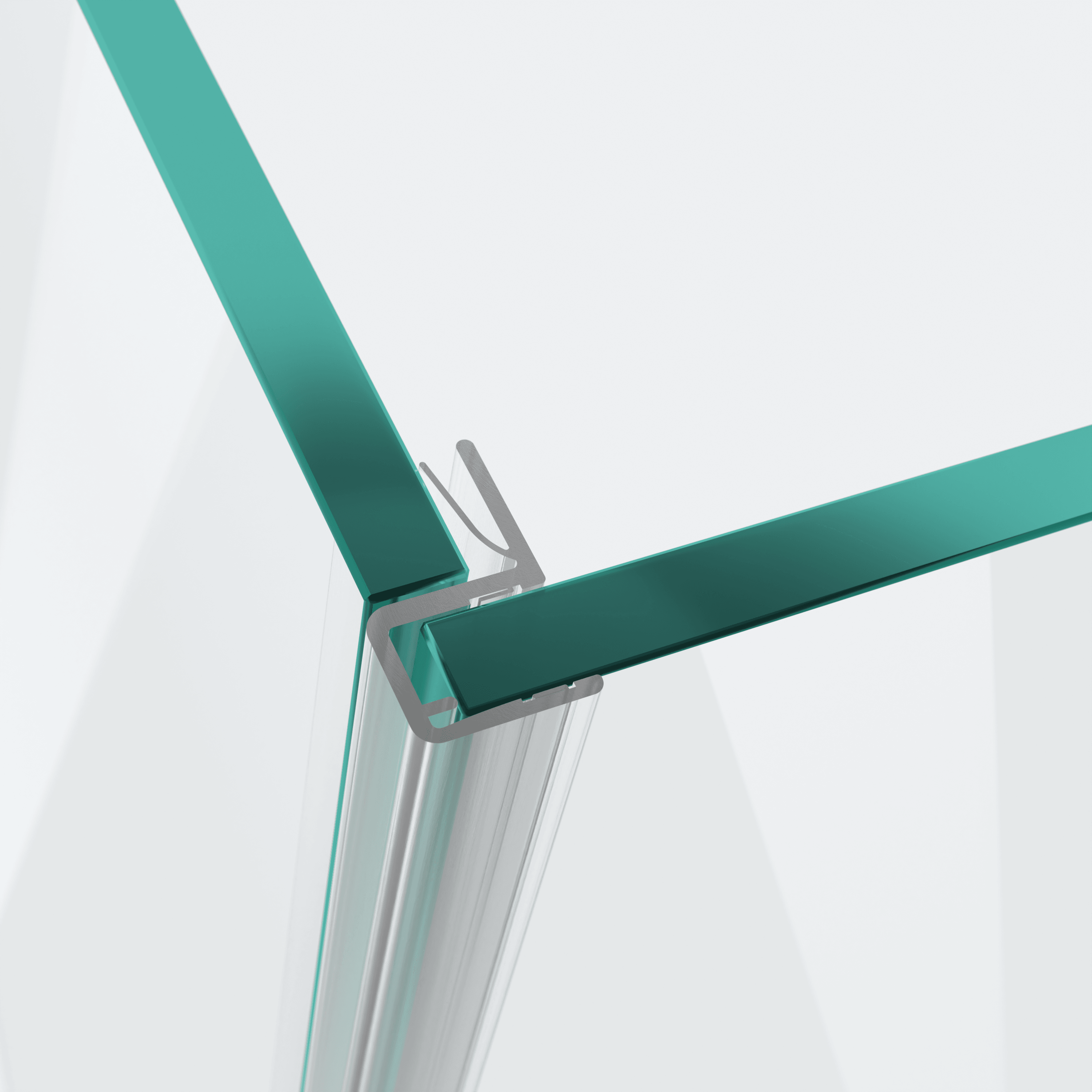
We stock stop profiles for 6–8 mm glass thicknesses to suit various installation scenarios. Depending on how the shower door and fixed glass panel are positioned in relation to each other, you can choose between a straight stop profile and a corner stop profile for a 90° angle.
If you’re unsure which to choose, our shower seal profile configurator will help you find the right profile based on your shower layout.
Finding the right stop profile
The key factors in selecting a hinge profile for a shower door are, in particular, the glass thickness, the angle between the glass panels and the existing gap width.
The standard hinge profile for 6–8 mm glass is designed for shower doors and glass panels that are positioned at right angles to one another. This profile is particularly suitable for narrow gaps and can seal gaps of up to 8 mm.
If, on the other hand, the shower door and the fixed glass panel are at right angles to one another, a 90° corner stop profile is the appropriate choice. This profile is also designed for glass thicknesses of 6–8 mm.
You should therefore measure both the glass thickness and the installation situation accurately before placing your order. This will ensure that the profile you choose fits the existing shower enclosure.
Determining the correct glass thickness and gap dimension
The thickness of the glass is particularly important for ensuring that a stop profile fits securely. The stop profiles offered here are designed for glass panes 6–8 mm thick.
In addition, the existing gap must be taken into account. The straight stop profile, for example, can be used with a gap of up to 8 mm.
If you’re unsure how to cut it to size correctly, take a look at our expert article.
Replacing the stop profile on the shower itself
In many cases, a worn stop profile on a glass door can be replaced without the need for a specialist firm. First, the old profile is carefully peeled away from the edge of the glass. The glass and its edge should then be thoroughly cleaned of limescale, soap residue and dirt.
The new strike profile is then fitted onto the cleaned glass edge. If the profile is longer than required, it can be cut to the required length.
Depending on the profile, a PUK saw or a suitable mitre shears, for example, are suitable for cutting it to size. You can find further tips on measuring, cutting and replacing in our section Expert Advice & Help.
In addition to stop profiles, you can also purchase, for example,centre seals,wall seals,sliding lip seals and magnetic seals.
What glass thickness do I need for the stop profiles?
The mounting profiles in this category are designed for glass thicknesses of 6–8 mm. The glass thickness should be measured directly on the existing shower cubicle before placing an order.
What is the difference between a 90° and a 180° stop profile?
With a 180° corner profile, the door and glass panel – or two doors – are aligned in a straight line. A 90° corner profile is used when the shower door and fixed glass panel are at right angles to one another.
How do you fit a stop profile?
The old profile is removed from the edge of the glass, the glass pane is cleaned, and the new profile is then fitted. In many cases, this does not require the services of a specialist firm.
Can I cut a stop profile to size myself?
Yes. If the profile is too long, it can be cut to the required length. Depending on the type, a PUK saw or mitre shears, for example, are suitable for this.
When should an old stop profile be replaced?
Replacement is particularly recommended if the profile is brittle, porous, damaged or heavily discoloured, or if it no longer seals the gap reliably.