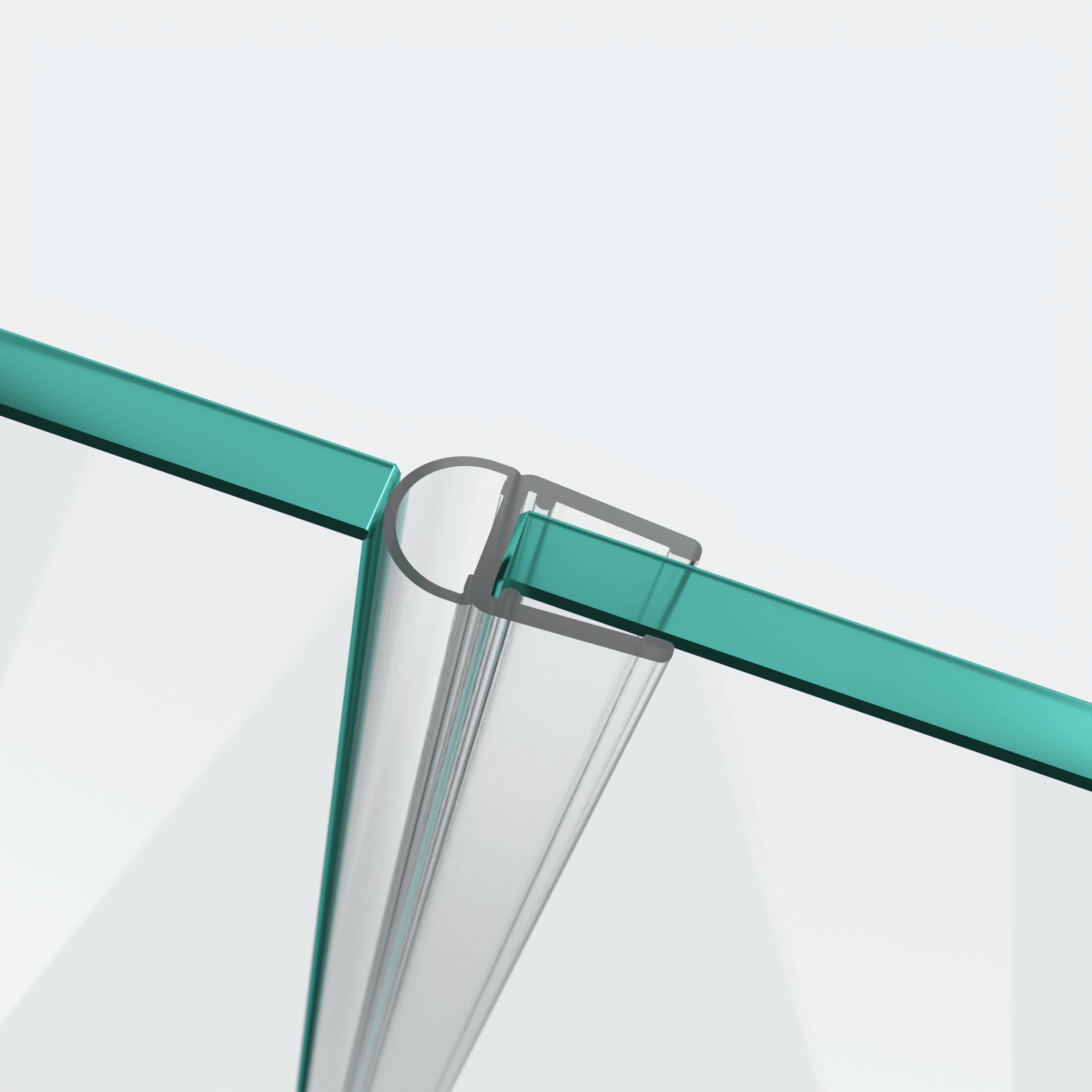
Hollow chamber seal
- 4-5 mm
- 6-8 mm
from 24.90 €
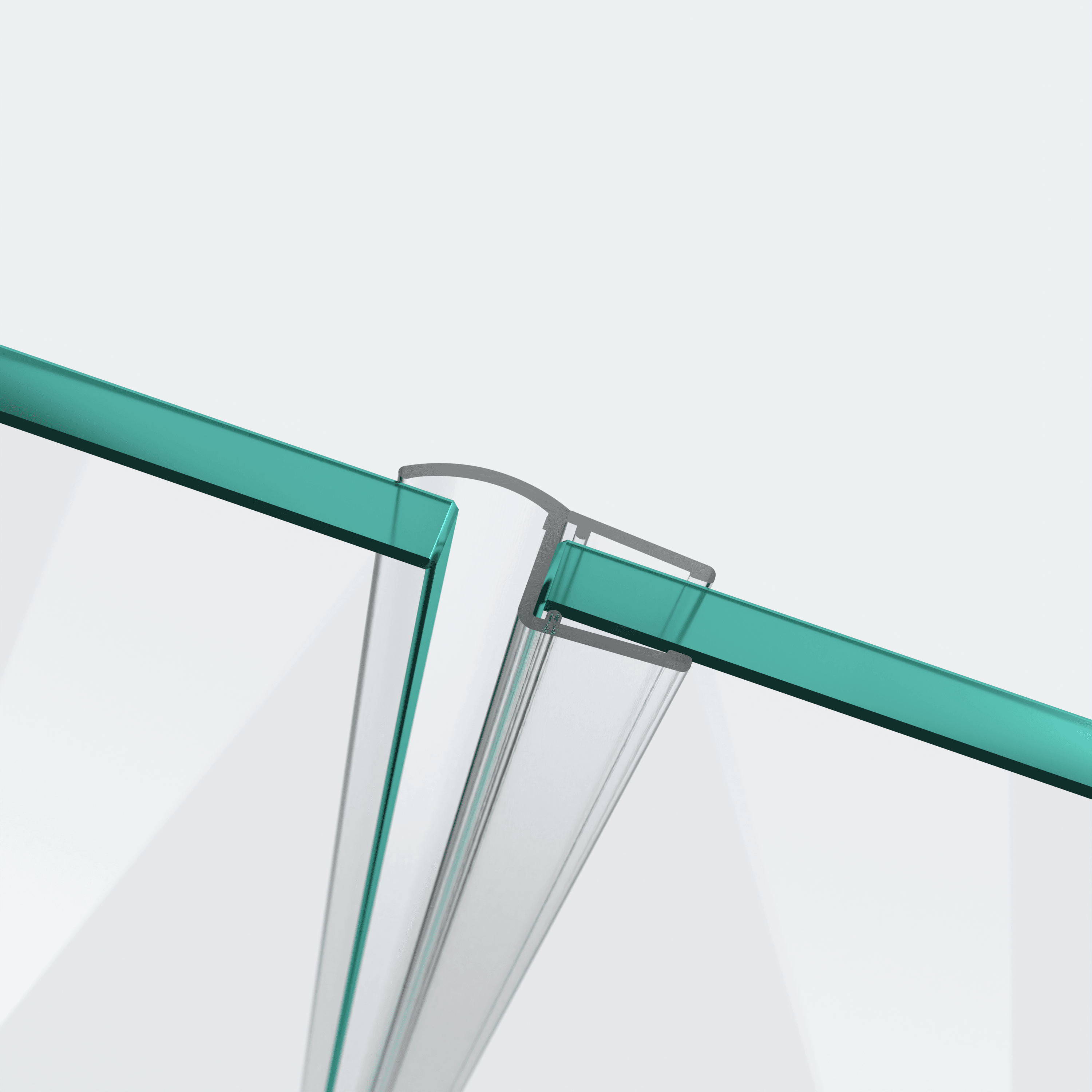
Wall and centre seal
- 4-5 mm
- 6-8 mm
from 24.90 €
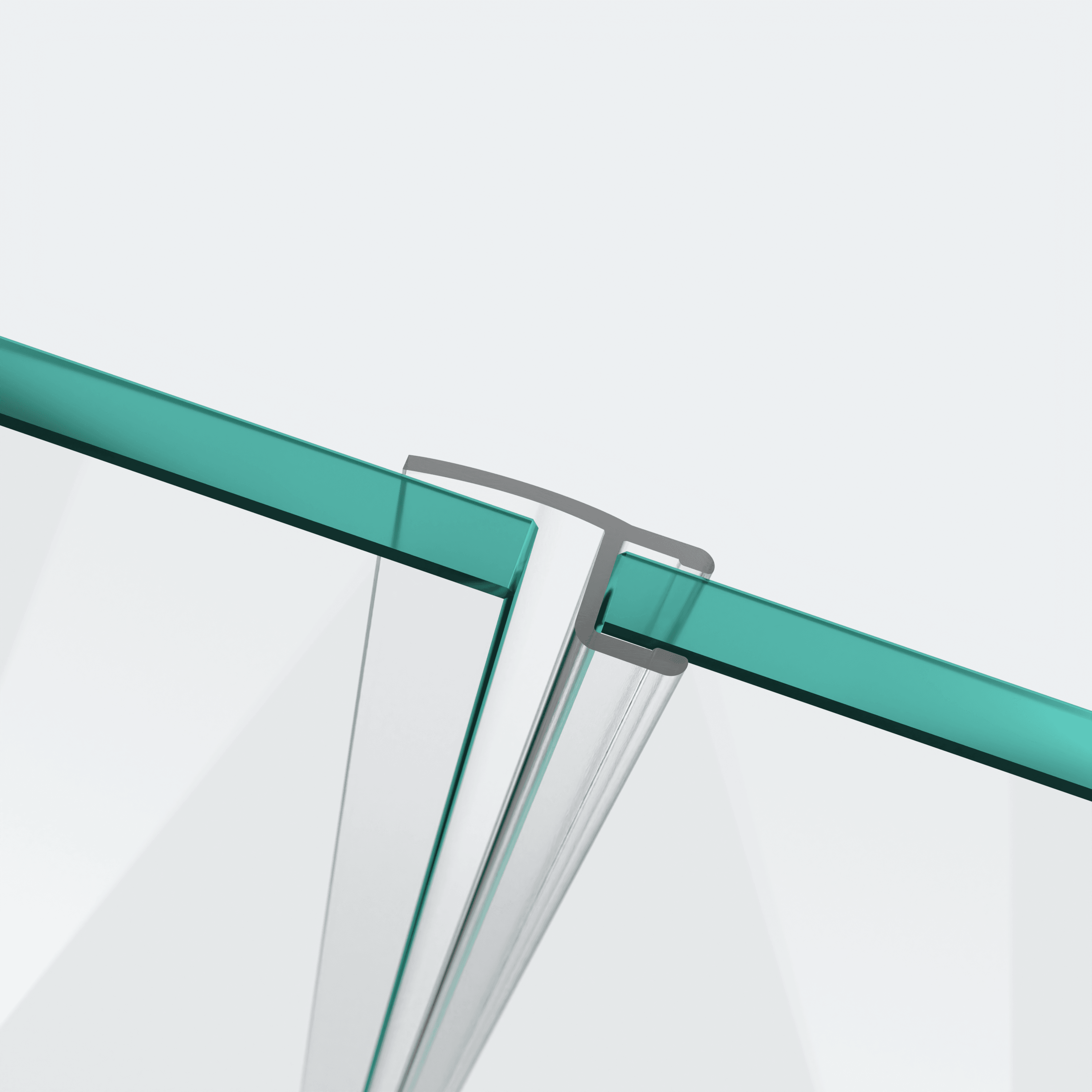
Wall and centre seal with short glass insertion
- 6 mm
- 8 mm
from 24.90 €
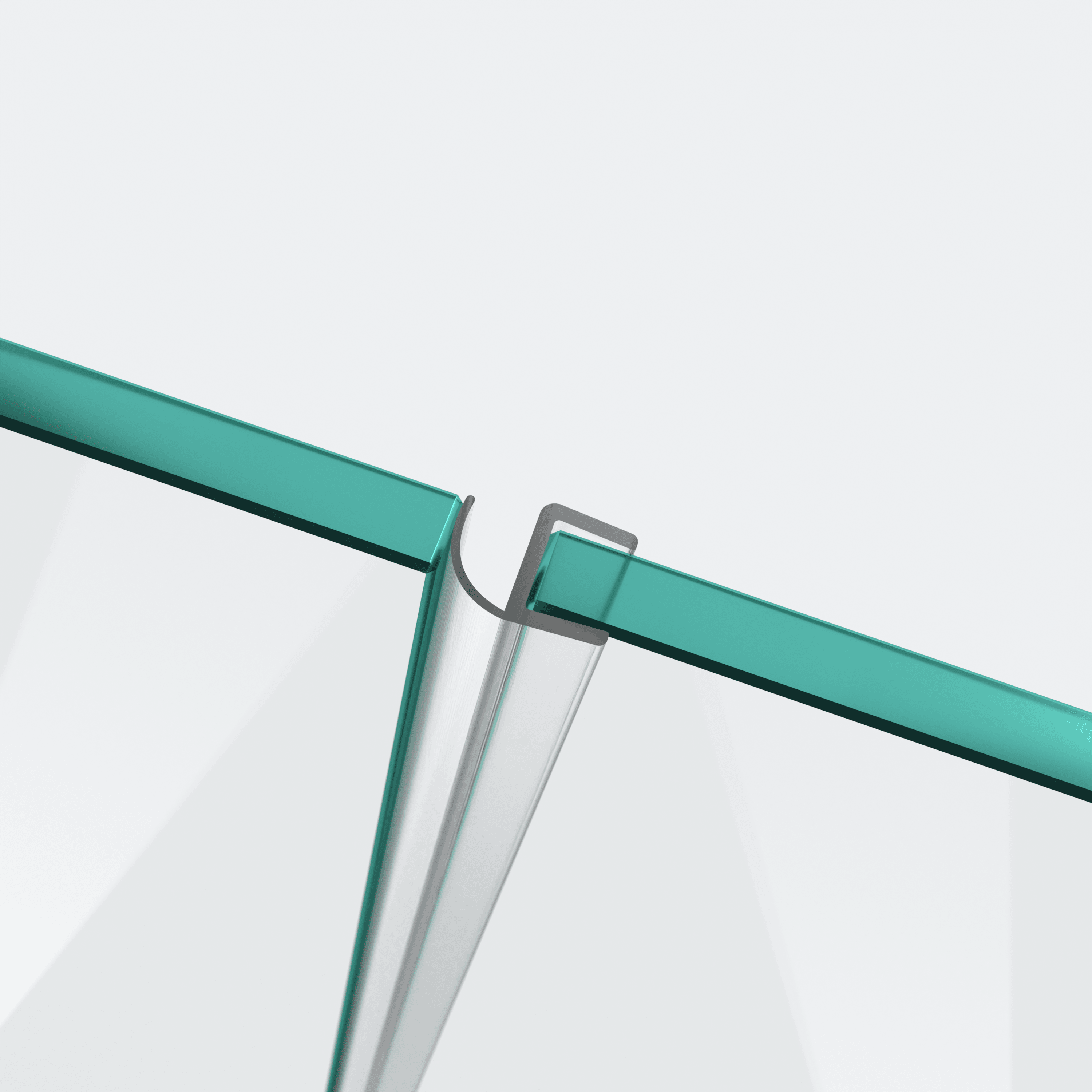
Wall and centre seal with half hollow chamber and short glass insertion
- 6 mm
- 8 mm
from 24.90 €
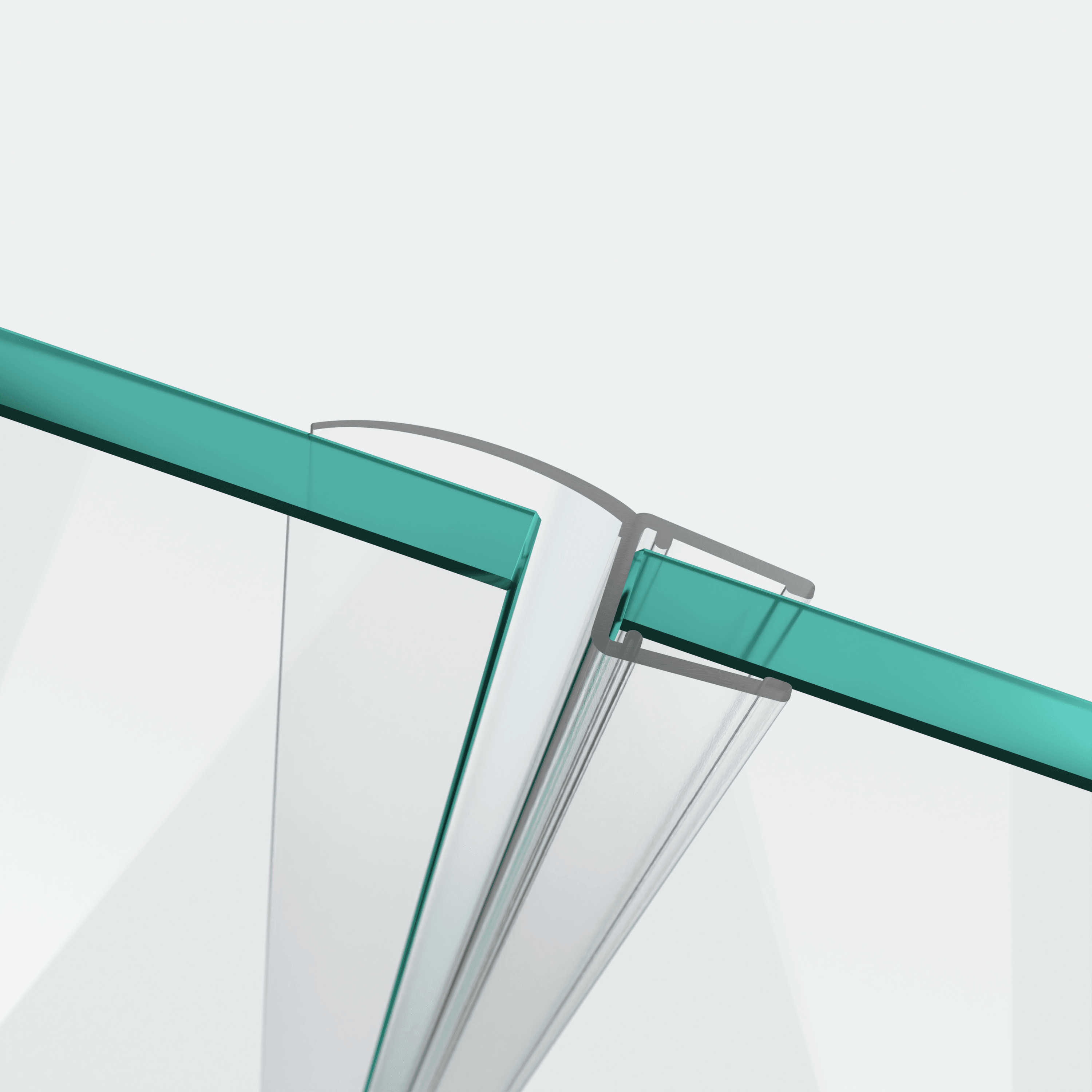
Wall and centre seal with long sealing lip
- 6-8 mm
from 24.90 €
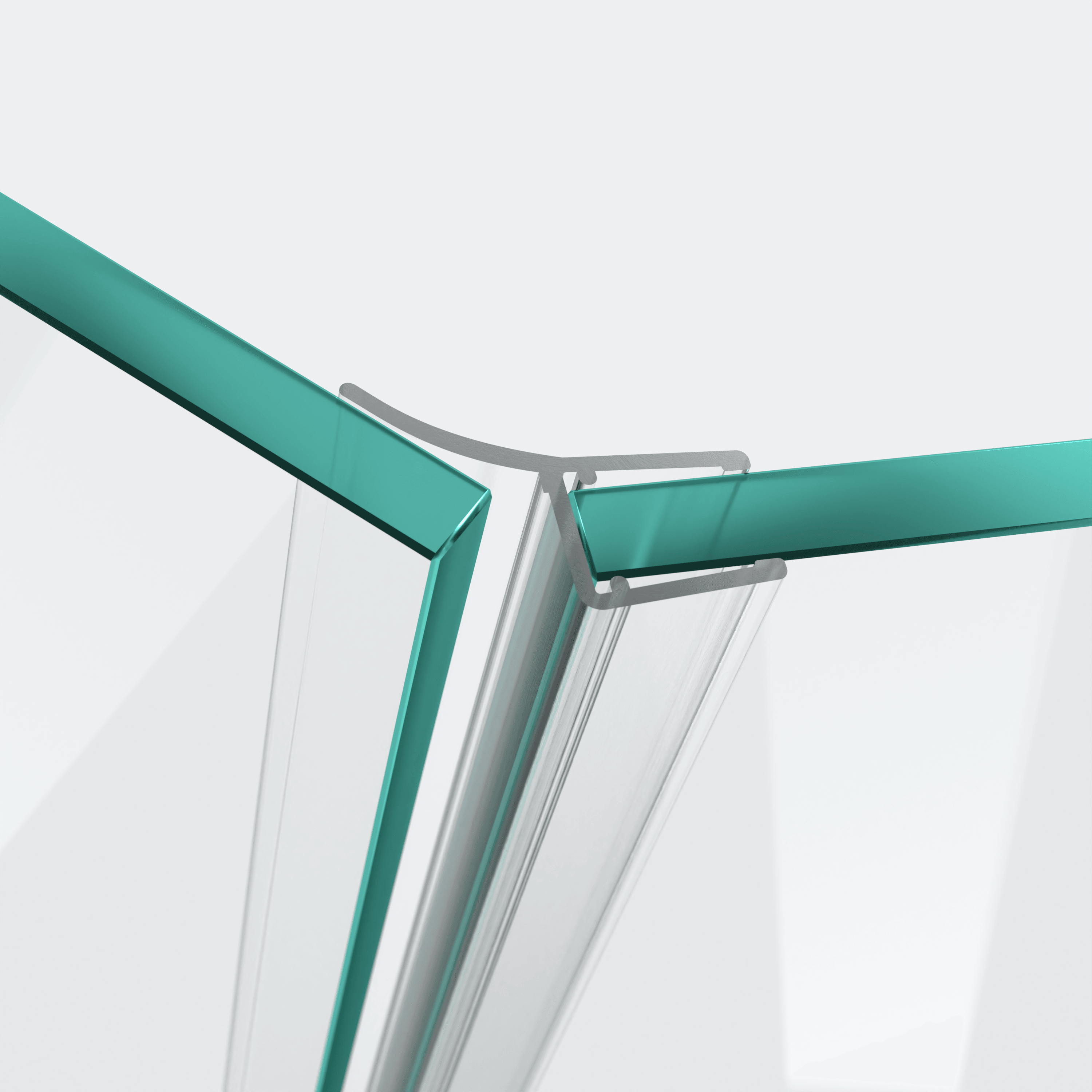
Wall and centre seal with long seal fin 135°
- 6-8 mm
from 24.90 €
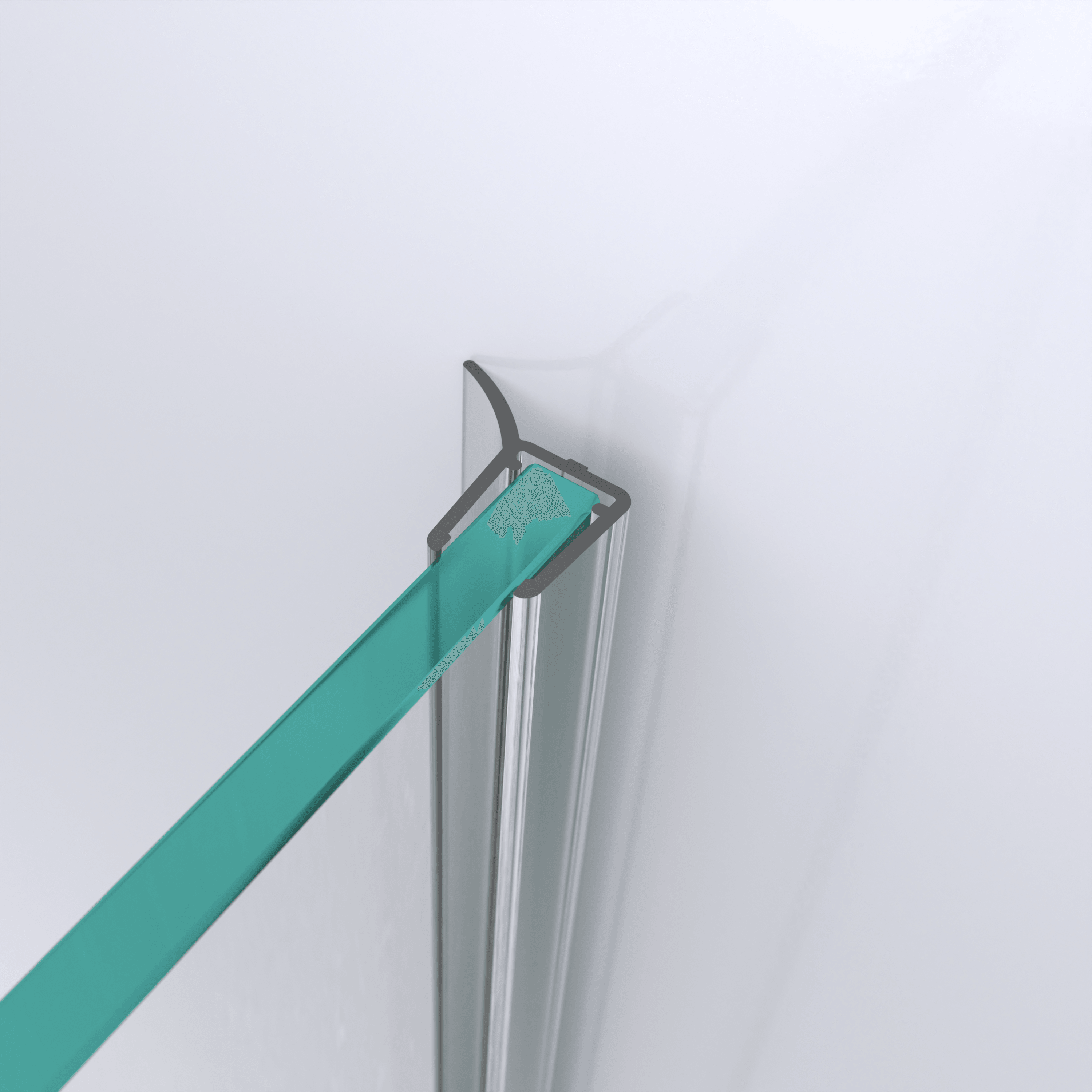
Wall seal
- 6-8 mm
from 24.90 €
Wall seals for showers – ensuring the glass is securely sealed against the wall
A suitable wall seal for the shower ensures that splash water is kept out as reliably as possible at the side joints of the shower enclosure. Particularly with all-glass showers, small gaps form between the glass and the wall, which should be neatly sealed with the correct sealing profile. We offer a range of wall seals for glass showers that simply clip onto the edge of the glass. Depending on the installation situation, different versions are available for glass thicknesses of 4–5 mm, 6 mm, 6–8 mm and 8 mm.
Other factors to consider when selecting the correct seal include the gap size, the position of the seal and the installation situation. If you’re not yet sure exactly which profile you need, you can use our Shower Seal Profile Configurator to search for a suitable seal step by step.
What sort of wall seal do I need for my shower?
When it comes to a shower seal between the glass and the wall, it depends on the design of your shower enclosure. A narrow gap, for example, requires a different seal to a wider gap between the glass panel and the wall. You will therefore find various solutions in our range, such as wall seals and centre seals, as well as designs with a longer sealing flap, a hollow chamber or a short glass recess.
Wall seals for various installation scenarios
Not every shower requires the same wall seal. Wall seals therefore differ, in particular, in terms of the shape and length of the sealing flap, as well as the construction of the profile itself.
A standard wall seal for 6–8 mm glass, for example, is suitable for small gaps and can also be used in certain 135° installation scenarios. Other wall and centre seals are available for glass thicknesses of 4–5 mm or 6–8 mm. For special installation situations, there are also wall and centre seals with a long sealing flap.
A longer sealing flap can be useful when a larger gap needs to be bridged. We also stock versions with a short glass recess. These, on the other hand, are suitable for installation situations where there is little space available on the glass pane for the profile to be fitted.
You should therefore not rely solely on the designation ‘wall seal’, but should, in particular, compare the cross-section and the specified dimensions of the profiles with your existing shower seal.
Replacing the wall seal on the shower itself
In many cases, a clip-on wall seal on a glass shower enclosure can be replaced without the need for a specialist contractor. First, carefully peel the old seal profile away from the edge of the glass. The edge of the glass should then be thoroughly cleaned of limescale, dirt and other residues. The new seal can then be fitted onto the cleaned glass edge. If the profile is too long, it can be cut to the required length. Depending on the profile, a PUK saw or a suitable mitre shears can be used for cutting. You can find detailed guidance on replacement and correct measurement in our Expert Advice & Help section.
Why is a wall seal needed in a shower?
A wall seal is used to seal a gap at the junction between the glass and the wall. It helps to keep splash water inside the shower area.
Which wall seal is suitable for my shower?
The key factors are, above all, the glass thickness, the gap size and the installation conditions. You should also compare the shape and dimensions of the existing profile with the technical drawings of the new seal.
Can I fit a wall seal myself?
Many wall seals are simply fitted onto the cleaned edge of the glass and can therefore be replaced without the need for a specialist contractor. It is important to use the correct glass thickness and a profile that fits the gap.
Can I shorten a wall seal?
Yes. The wall seals can be cut to the required length. Depending on the profile, a PUK saw or mitre shears, for example, are suitable for this.
How do I clean a wall seal?
It is best to use lukewarm water and a soft microfibre cloth. Cleaners containing chlorine or strong alkalis, abrasive cleaners and solvents should be avoided.