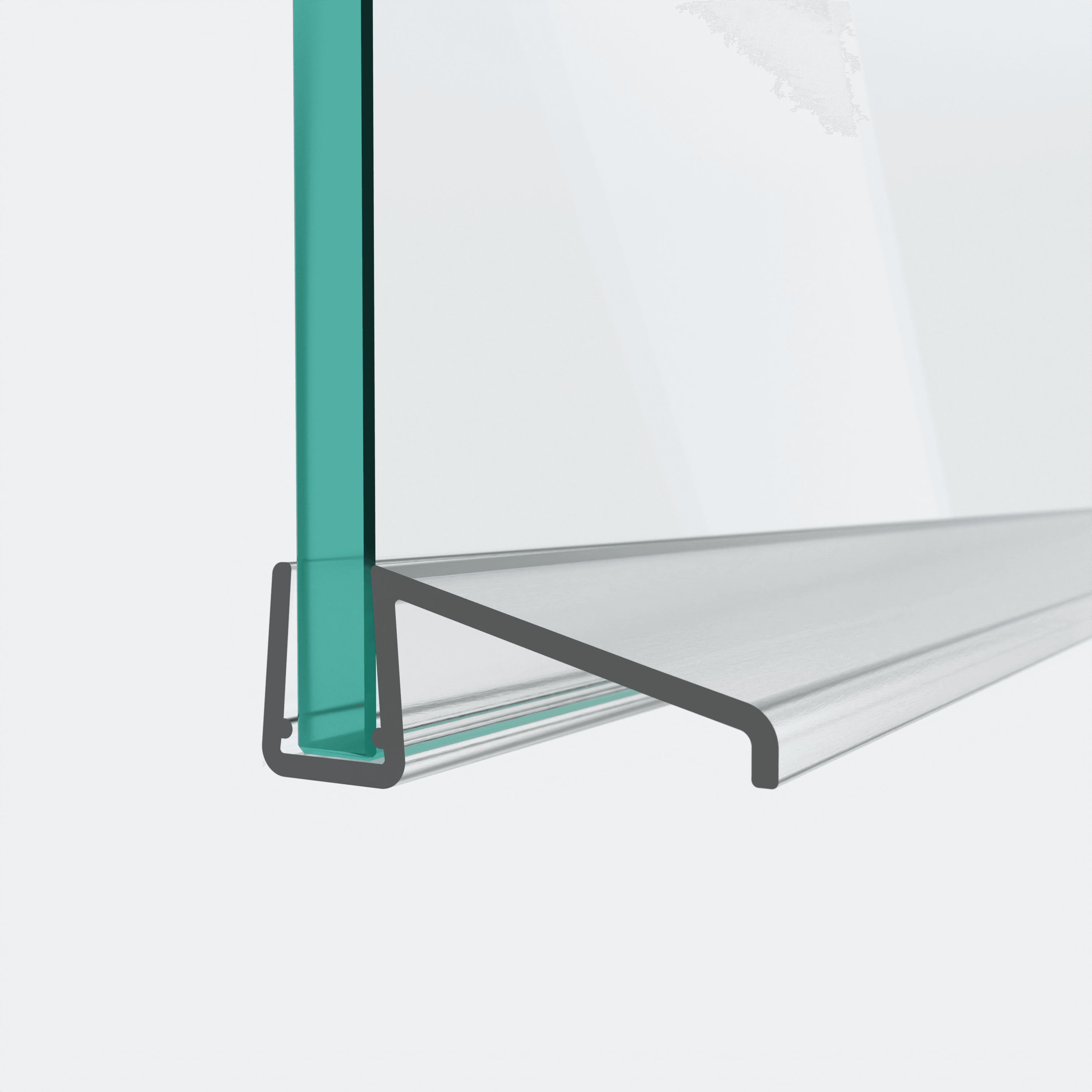
Horizontal sliding door seal with long water deflector
- 6-8 mm
from 16.90 €
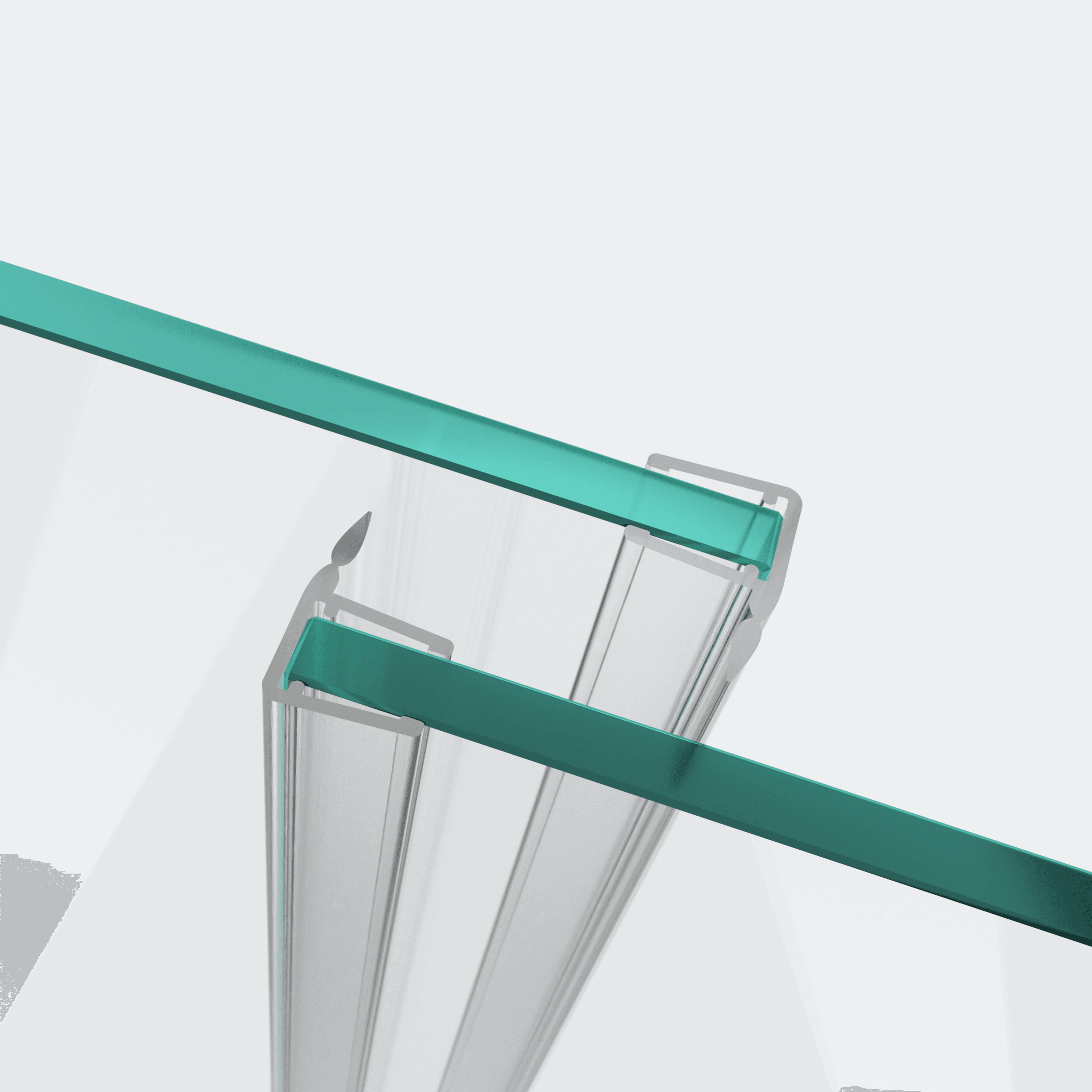
Sliding door seal with short water deflector
- 5 mm
- 6-8 mm
from 24.90 €
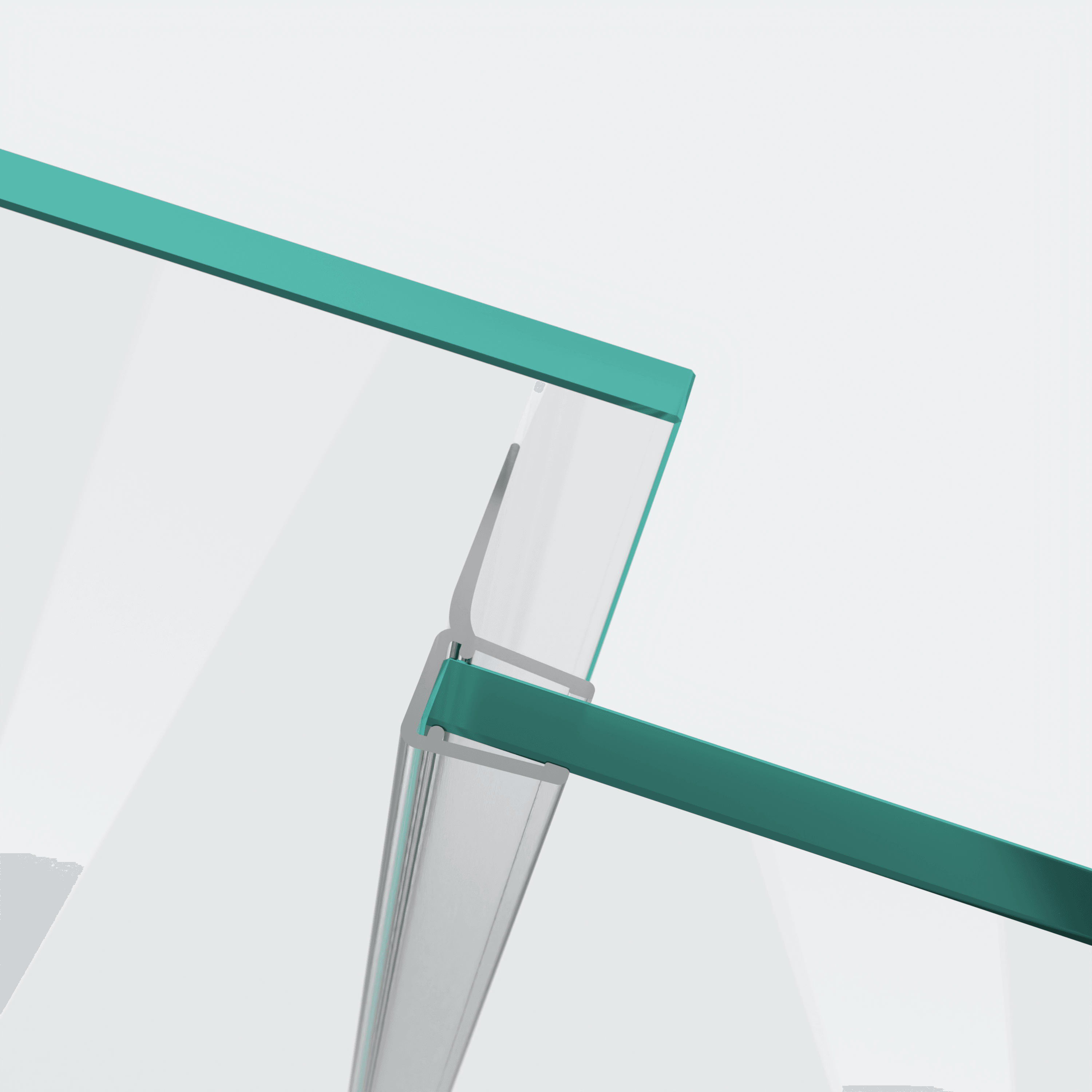
Sliding door seal with long water deflector
- 6-8 mm
from 24.90 €
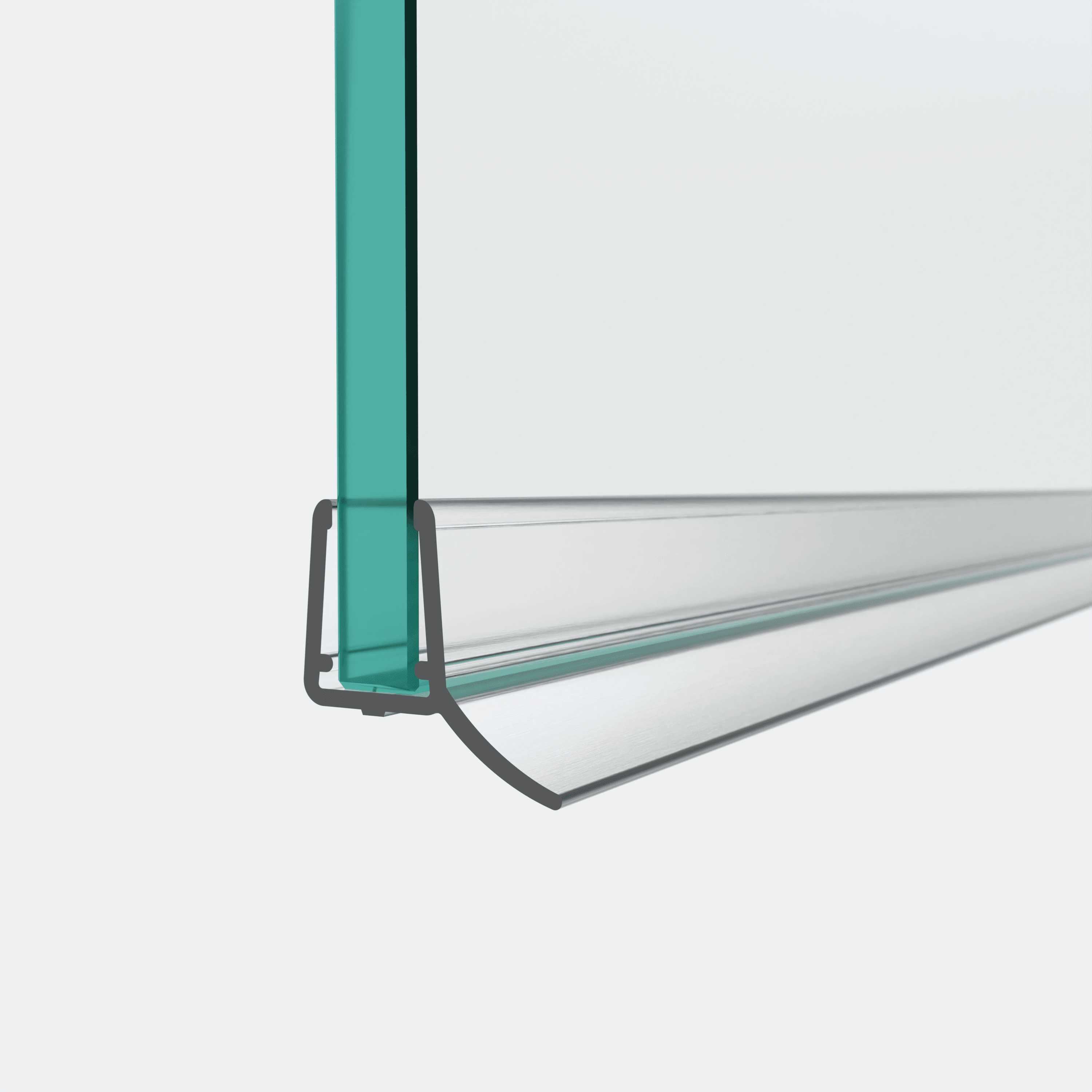
Horizontal sliding door seal
- 6-8 mm
from 15.90 €
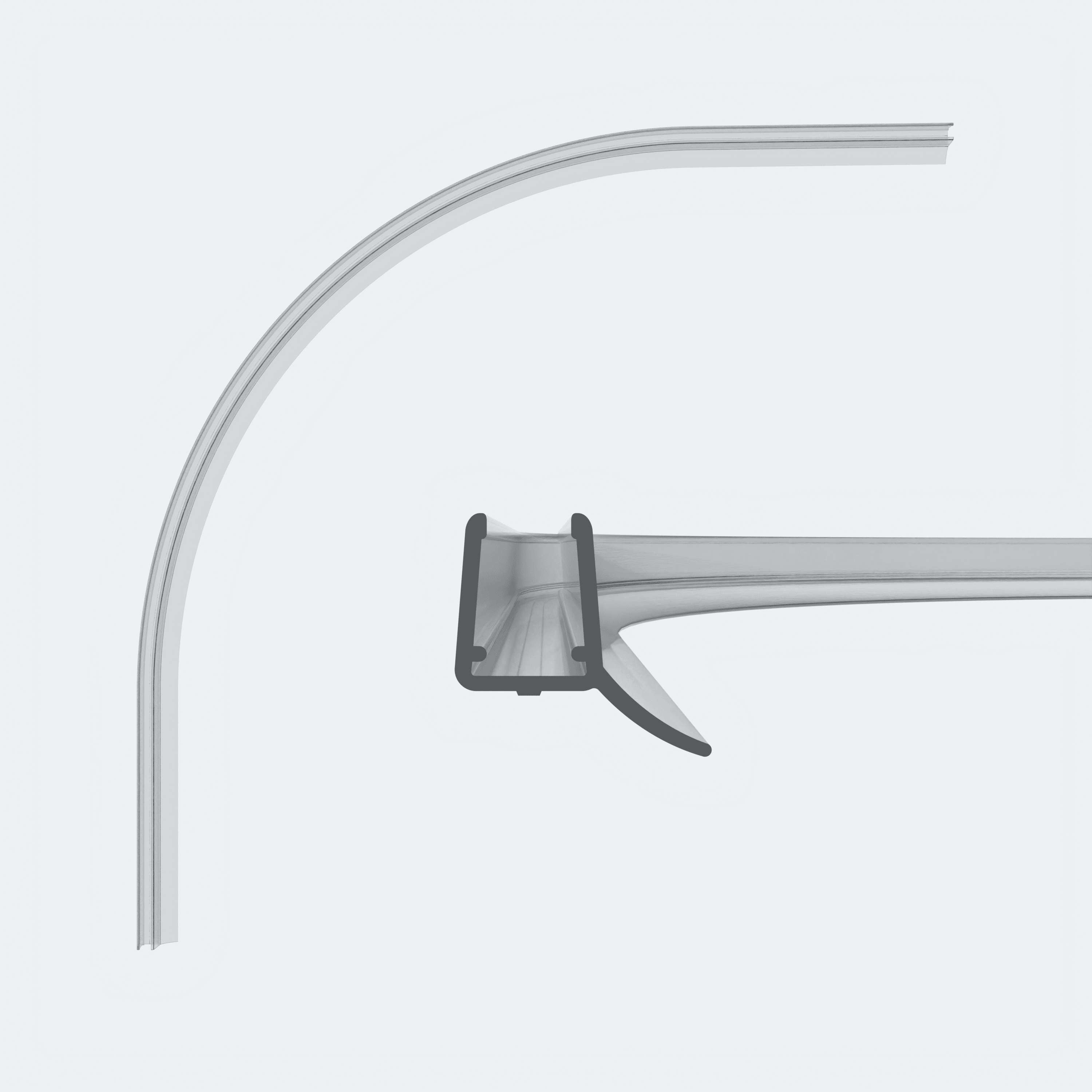
Pre-curved sliding door seal with side deflectors
- 6-8 mm
from 31.75 €
Sliding door seals for showers – reliable protection against splashes
A suitable sliding door seal for the shower ensures that water stays inside the shower cubicle, even with movable glass doors. Unlike with traditional hinged doors, the seal profiles for a sliding door must be tailored to the specific design and direction of movement of the glass panels. We stock a range of shower seals for sliding doors, including vertical and horizontal profiles, versions with short or long water deflectors, and a pre-curved sliding door seal for round and quarter-circle showers. Depending on the model, the profiles are suitable for glass thicknesses of 5 mm or 6–8 mm. The transparent seals blend discreetly into modern all-glass showers whilst protecting against splashing water. If you are unsure which profile is suitable for your shower, you can use our shower seal configurator.
Finding the right sliding door seal
Firstly, you should determine whether a vertical or horizontal sliding door seal is required. Vertical profiles are fitted along the side edge of the glass and seal, for example, the gap between the movable sliding door and a fixed glass panel. Horizontal sliding door seals, on the other hand, are fitted to the bottom edge of the glass door. As sliding doors often run in a guide or rail, there is frequently only a small gap available beneath the door. There are specially designed profiles available precisely for this purpose. When making your selection, pay particular attention to:
- Glass thickness of the sliding door
- vertical or horizontal installation
- Gap between the glass panels
- Gap below the shower door
- Length of the water deflector
- straight or curved shower door
A vertical sliding door seal is fitted along the glass edge of the movable shower door. It seals the vertical gap between the sliding door and the adjacent glass panel.
At duschdichtungsprofile.de, profiles with short or long deflectors, amongst others, are available for this purpose.
The sliding door seal with a short deflector is available for glass thicknesses of 5 mm and 6–8 mm. It is suitable for sealing the gaps between the glass panels at the sides and can be fitted onto the edge of the glass without the need for tools. Where there is a larger gap, however, the sliding door seal with a long deflector may be more appropriate. The longer water deflector is specifically designed to bridge a larger gap between the glass panels. In addition to the side joints, the area below the door also needs to be sealed in many sliding shower enclosures. Special horizontal sliding door seals are available for this purpose. The horizontal sliding door seal with a long water deflector has been specially developed for sliding shower doors with glass thicknesses of 6–8 mm. Unlike traditional lower door seals, this design does not have a sealing lip pointing vertically downwards. This makes it particularly suitable for sliding doors that run in a track and have only a very small gap below the glass.
For traditional hinged or swing doors, however, our sliding lip seals may be the more suitable solution. In the case of a circular or quarter-circle shower, a straight shower seal is often insufficient. The seal must be able to follow the curve of the curved glass panel or sliding door. This horizontal lip seal has been specially developed for sliding doors in circular and quarter-circle showers.
It is suitable for glass thicknesses of 6–8 mm and a radius of approximately 500 to 550 mm. The pre-formed design allows it to adapt to the curved shape of the shower door whilst ensuring reliable protection against splash water at the bottom.
Replacing a sliding door seal yourself
Many shower seals for sliding doors can be replaced yourself with minimal effort. The vertical profiles, for example, are simply slotted onto the relevant glass edge. No tools are required to fit these types of seals. First, carefully remove the old seal and then clean the glass edge thoroughly. Limescale, soap residue and other deposits should be removed completely. The new seal can then be fitted onto the cleaned glass edge. Next, check that the sliding door can still move freely and that the sealing lip or water deflector is correctly seated against the opposite surface. If you are not yet sure which seal you need, our Shower Seal Profile Configurator will guide you to the right profile based on your shower shape and door type.
How to clean and maintain sliding door seals properly
Shower seals regularly come into contact with water, limescale, soap residue and cleaning products. Gentle cleaning therefore helps to ensure that the seal remains transparent, flexible and functional for as long as possible. For regular maintenance, use lukewarm water and a soft microfibre cloth. Cleaners containing chlorine or strong alkalis, as well as abrasive cleaners and solvents, should be avoided, as these can damage the material of the seal lips. If an older sliding door seal is already brittle, heavily discoloured, damaged or leaking, it should be replaced with a suitable new profile.
Find the right sliding door seal for your shower
Choosing the right sliding door seal for a glass shower always depends on the specific installation situation. Before placing your order, you should therefore check, in particular, the glass thickness, the position of the seal, the gap width and the shape of your shower. At duschdichtungsprofile.de, you will find vertical, horizontal and pre-curved sliding door seals, as well as variants with water deflectors of varying lengths. For other parts of your shower enclosure, you can also choose from sliding lip seals, centre seals, wall seals and magnetic sealing strips.
What sort of seal do I need for a sliding shower door?
This depends on the thickness of the glass, the installation position, the gap size and the shape of the shower door. First, check whether a vertical or horizontal seal is required, and then measure the thickness of the glass and the gap.
When do I need a long water deflector?
A sliding door seal with a long deflector is particularly suitable when a larger gap between the glass panels needs to be bridged.
Can I fit a sliding door seal myself?
Many profiles can be fitted by the user. The vertical sliding door seals, for example, are simply snapped onto the cleaned edge of the glass and require no tools.
Why are there special seals for sliding doors?
Sliding doors move parallel to other glass elements and often run along a guide rail. The sealing profiles must therefore be designed to keep out splash water without hindering the movement of the door.
When should a sliding door seal be replaced?
It is advisable to replace the seal if it has become brittle, cracked, heavily discoloured or is leaking, or if it no longer sits securely on the edge of the glass.